

Tin Germanium Master Alloy
Available for domestic and international distribution, the Tin Germanium Master Alloy from DKL Metals offers a precise, reliable solution for introducing high-temperature Germanium into much lower-melting tin-based alloys. This master alloy provides a cost-effective and dependable alternative to pure Germanium, eliminating common solution and segregation problems in global solder production.
Key Benefits & Uses
Easy Introduction
Ensures easy and controlled introduction of Germanium to tin alloys without segregation issues.
Anti-Dross Effect
Acts as a powerful anti-oxidant that suppresses tin oxidation, dramatically reducing dross formation in solder pots.
99.9% SnGe Minimum
Manufactured strictly from LME registered Virgin Tin and ultra-pure 5N Germanium to guarantee premium alloy purity.
Electronics Focus
Widely used in mass manufacturing, electronics assembly, and high-grade solder repair sectors.
Product Specifications
| Element / Property | Composition Range / Value |
|---|---|
| Tin (Sn) | 98.9% to 99.1% |
| Germanium (Ge) | 0.9% to 1.1% |
| Tin + Germanium (Sn+Ge) | 99.9% Min |
| Antimony (Sb) | 0.030% Max |
| Lead (Pb) | 0.030% Max |
| Bismuth (Bi) | 0.010% Max |
| Copper (Cu) | 0.020% Max |
| Melting Range | 230 to 240°C (445 to 465°F) |
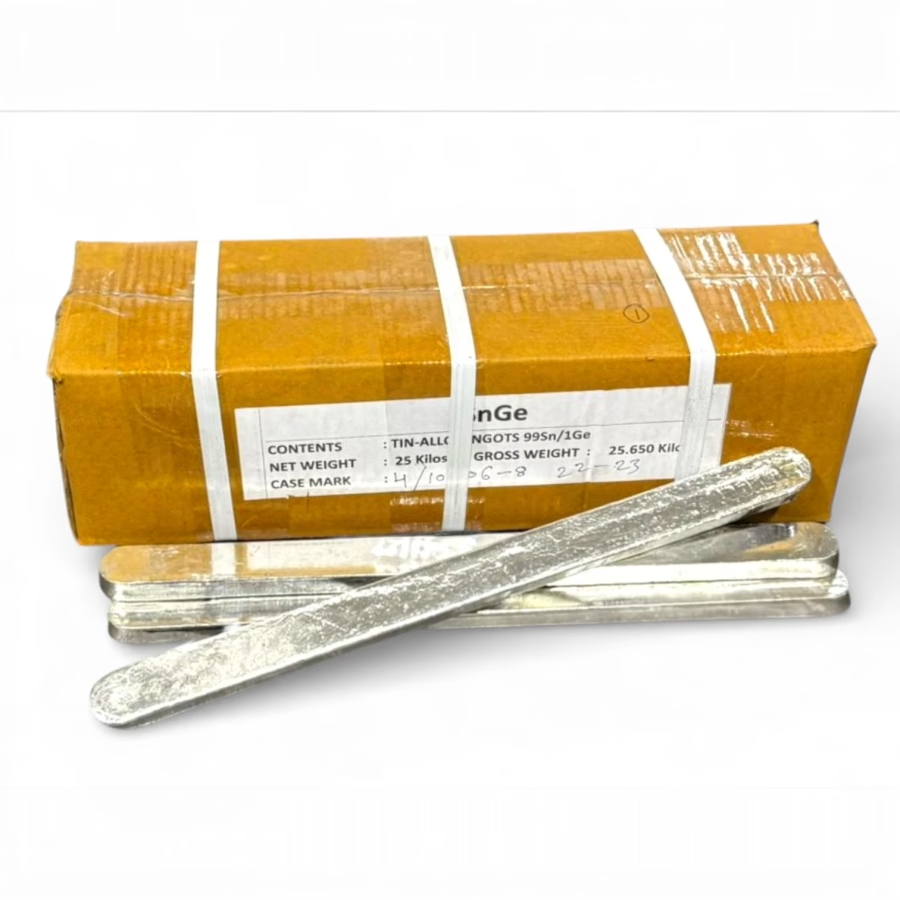
Available Formats: Supplied standard in 25kg boxes containing handy 1 kg sticks, providing an ideal format for accurate, easy additions during solder production.
Why Choose DKL Metals for SnGe Master Alloy?
DKL Metals guarantees a high-quality master alloy with precise analysis and purity guaranteed by strict manufacturing controls. Our product supports efficient, consistent solder production with full UK supply reliability and technical expertise.
Looking for compatible finished products? Check out our full SN100C Range!
Frequently Asked Questions
Why use a master alloy instead of pure Germanium? +
Pure Germanium has a very high melting point and struggles to dissolve smoothly into lower-melting tin. Using this master alloy prevents solution and segregation issues, ensuring an even mix throughout your batch.
What is the mechanism behind the anti-drossing effect of Germanium? +
Germanium has a much higher affinity for oxygen than tin does. When added to the bath, the Germanium preferentially oxidises and migrates to the surface, forming an ultra-thin, invisible protective oxide layer. This barrier blocks atmospheric oxygen from contacting the molten tin underneath, drastically suppressing dross formation and reducing metal waste during wave soldering.
Does each batch of Tin Germanium Master Alloy come with a Certificate of Analysis (CoA)? +
Yes. Every single batch is fully tested and supplied with a detailed Certificate of Analysis (CoA). This analysis report provides the exact elemental breakdown and trace impurity measurements, ensuring full traceability and verified compliance for RoHS and REACH regulated electronics manufacturing.
What is the recommended method for adding SnGe master alloy to an active solder bath? +
The 1 kg sticks should be introduced directly into the molten solder wave or static bath when it is at normal operating temperature. Because the master alloy utilizes a high-purity tin base, the sticks will dissolve smoothly and rapidly distribute the Germanium evenly throughout the bath without requiring excessive stirring or overheating.