

Nickel Phosphorus (NiP) Master Alloys
Improve Strength and Brazing Flow
Our Nickel-Phosphorus (NiP) master alloys are high-performance metallurgical additives engineered for the production of nickel-based brazing alloys. Available in NiP16 and NiP20 grades, these alloys provide a precise, efficient method for introducing phosphorus to achieve superior flow characteristics and high-temperature strength. They are designed for rapid, homogeneous dissolution in industrial melt environments.
Precise Alloying
Available in NiP16 (15.0-18.0% P) and NiP20 (18.0-21.0% P) to ensure exact phosphorus dosing for metallurgical consistency.
Enhanced Brazing
Specifically engineered to lower liquidus temperatures and optimise flow, ensuring deep penetration in narrow or complex joints.
Superior Strength
Engineered for its dual ability to provide excellent corrosion resistance and high surface hardness, ensuring your components withstand even the most abrasive and chemically aggressive environments.
Technical Specifications (Weight %)
| Grade | P (%) | Cu (%) | Fe (%) | Mn (%) | Co (%) | Al (%) | Si (%) | C (%) | S (%) |
|---|---|---|---|---|---|---|---|---|---|
| NiP16 | 15.0 – 18.0 | 0.2 max | 0.1 max | 0.1 max | 0.1 max | 0.05 max | 0.15 max | 0.1 max | 0.01 max |
| NiP20 | 18.0 – 21.0 | 0.2 max | 0.1 max | 0.1 max | 0.1 max | 0.05 max | 0.15 max | 0.1 max | 0.01 max |
*Derived from KBM AFFILIPS NiP Technical Data (2023-01). Specifications for nickel-phosphorus master alloys generally align with ISO 6372:2017 (Nickel and nickel alloys). Other grades, custom phosphorus concentrations, and specialised packaging are available upon request.
Physical Properties & Melting Ranges
View Melting & Density Data +
- NiP16 (15-18% P): 1100 – 1175 °C | ~7.3 g/cm³
- NiP20 (18-21% P): 1100 – 1175 °C | ~7.3 g/cm³
*Melting points vary within this range based on the precise phosphorus concentration. Density is approximately 7.3 g/cm³ for both standard grades.
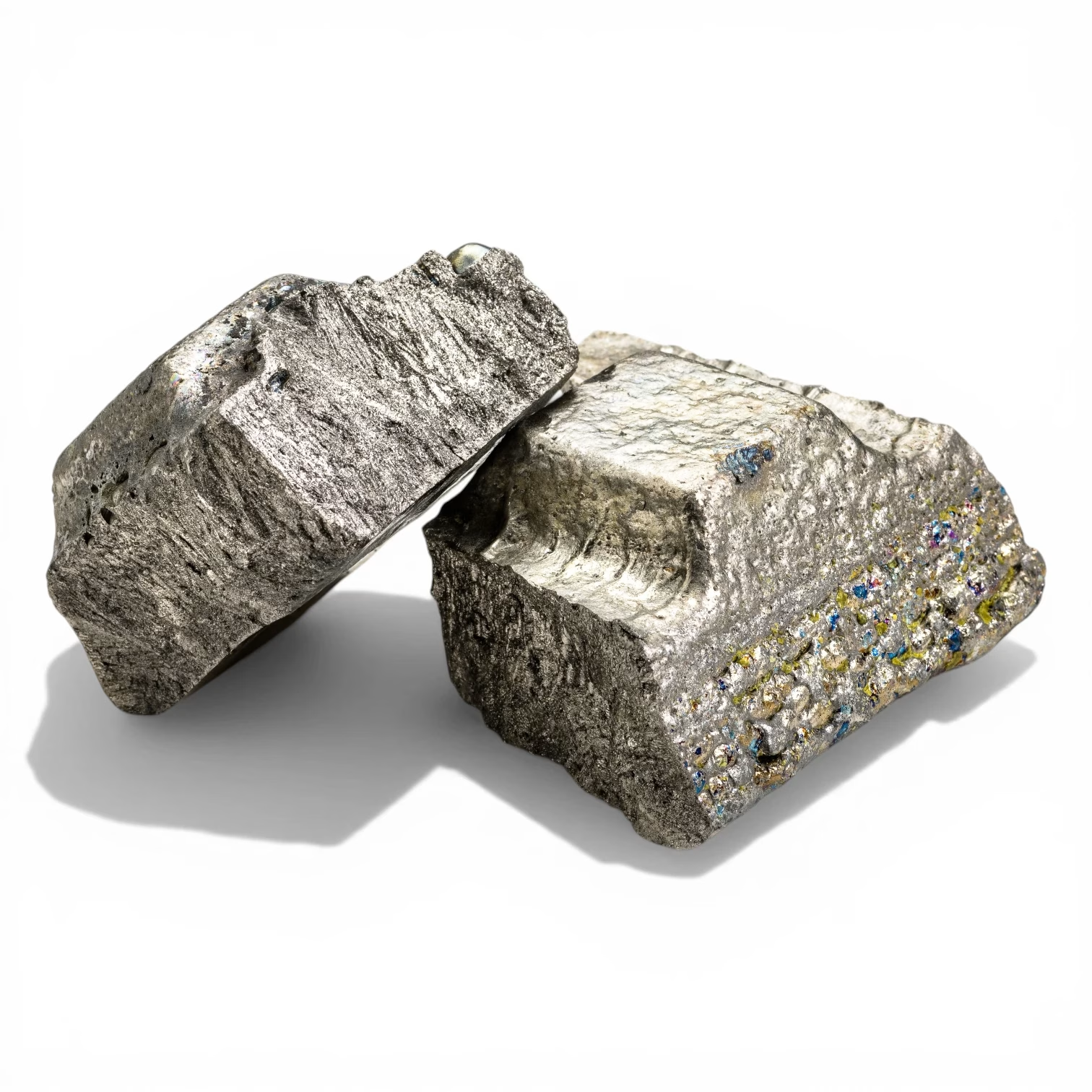
Standard Formats: Supplied as broken waffle ingots (NiP16) packed in pallet box or steel drums on a pallet, or ~14-18 kg waffle ingots (NiP20) stacked on wooden pallets.
Nickel-Phosphorus (NiP) Master Alloy FAQ
How should NiP master alloy be added to a nickel bath? +
Before addition, ensure the bath surface is completely clear of dross. Add the NiP16 or NiP20 master alloy at normal operating temperatures (typically above 1175°C). Stir the bath thoroughly to ensure rapid and homogeneous dissolution of the phosphorus, which is critical for consistent brazing performance.
How does phosphorus content affect the melting point of the alloy? +
The melting point of the NiP master alloy fluctuates between 1100°C and 1175°C depending on the phosphorus weight percentage. Precise control of the phosphorus level is essential to achieving the desired eutectic point for specific brazing applications.
When is Nickel-Phosphorus preferred over other nickel master alloys? +
NiP is preferred when creating filler metals that require extreme resistance to chemical erosion and oxidation. Unlike silicon-based additives, phosphorus provides superior flow in vacuum brazing environments and is essential for components operating in highly corrosive or radioactive atmospheres.
What are the risks of improper phosphorus levels in nickel alloys? +
Inaccurate phosphorus dosing can lead to liquation issues or brittle joint interfaces. Using a high-purity master alloy like NiP20 ensures that impurities (such as Fe or S) are kept below 0.1%, preventing grain boundary embrittlement and ensuring the structural integrity of the final braze.
How should NiP master alloys be stored to prevent oxidation? +
To maintain metallurgical purity, NiP must be stored in a clean, dry, climate-controlled area. Excessive humidity can lead to surface oxidation, which may introduce unwanted oxides into the melt, potentially compromising the flow and vacuum-integrity of the brazing alloy.