

Leaded Solid Solder Wire
Optimised for High-Reliability Automated Assembly
Our E-Qual Leaded solid solder wire range is formulated for mission-critical selective soldering and solder pot replenishment. Designed for industries where performance is non-negotiable, these alloys provide the thermal stability and predictable flow necessary for complex through-hole components in RoHS-exempt manufacturing environments.
For lead-free RoHS compliant solid wire please check out our Lead-Free Solid Solder Wire product page
Thermal Predictability
Achieve exact process control with eutectic and narrow-range alloys that offer consistent melt-flow characteristics.
Bath Maintenance
The high-purity solid format is the ideal solution for replenishing solder pots without introducing unwanted flux residues.
Industrial Feed Rates
Engineered for high-torque autofeed systems, ensuring uniform wire tension and diameter for continuous 24/7 production.
Alloy Performance Data
| Property | 63/37 (Sn63) | 60/40 (Sn60) | 40/60 (Sn40) |
|---|---|---|---|
| Composition | Sn63 / Pb37 | Sn60 / Pb40 | Sn40 / Pb60 |
| Solidus/Liquidus | 183°C (Eutectic) | 183°C – 190°C | 183°C – 238°C |
| Tensile Strength | ~54 MPa | ~49 MPa | ~40 MPa |
| Density | 8.40 g/cm³ | 8.50 g/cm³ | 9.30 g/cm³ |
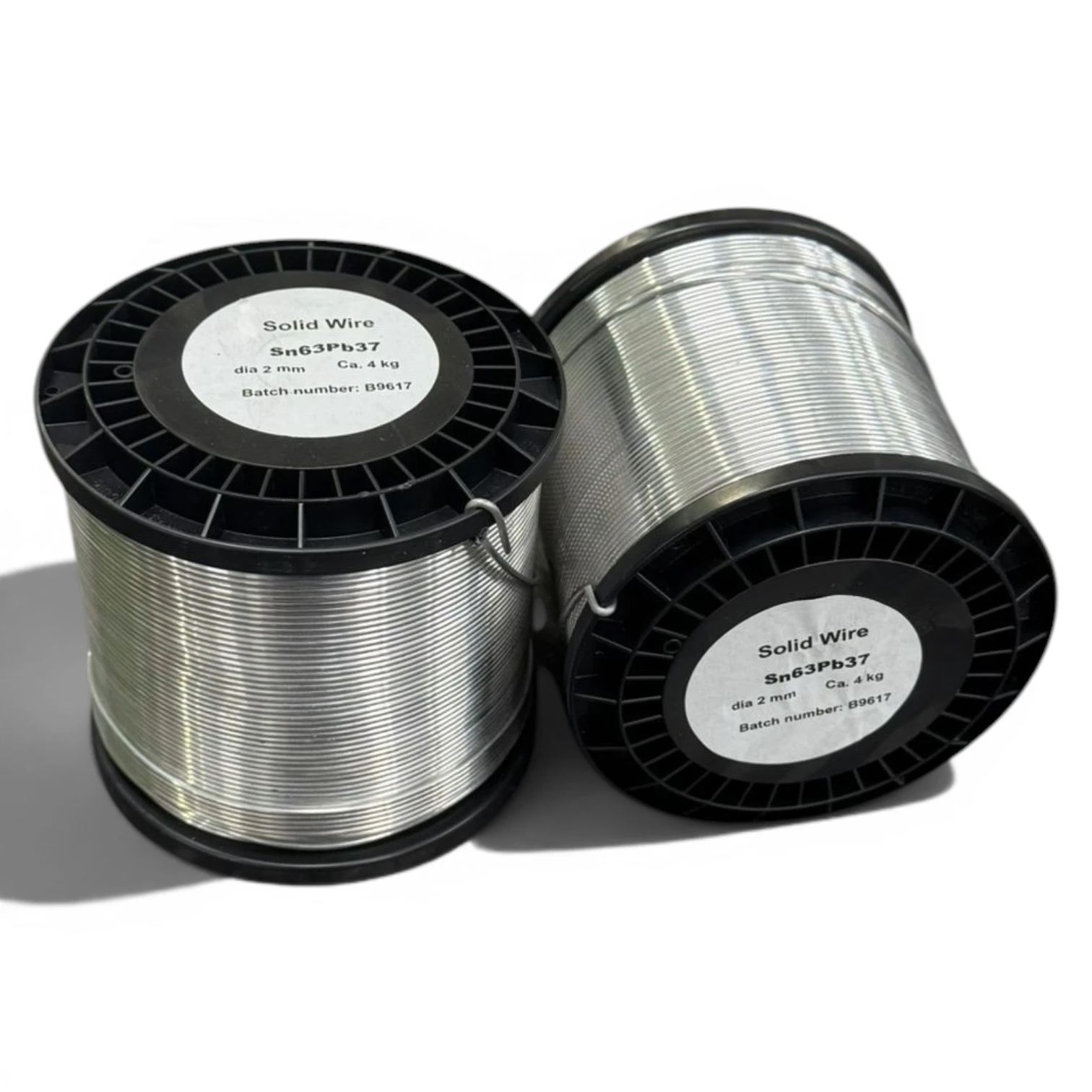
Standard Formats: Supplied in 2mm and 3mm diameters on 4kg DIN K125 plastic reels to suit most automated wire-feed systems. All alloys are manufactured to ISO 9453:2020 standards. Note: These alloys contain lead and are intended for RoHS-exempt applications.
Leaded Solid Solder Wire FAQ
What is the best leaded solder for automated selective soldering? +
For high-speed automated selective soldering, 63/37 (Sn63Pb37) is the industry standard. As a eutectic alloy, it transitions instantly from solid to liquid at 183°C, ensuring rapid wetting and consistent joint integrity in systems using external fluxing.
Why should I use solid solder wire instead of flux-cored wire for pot top-ups? +
Using solid solder wire for automated top-ups prevents unwanted flux contamination in the solder bath. Since selective soldering systems apply flux independently, adding flux-cored wire would cause excessive dross formation and potentially clog feeding tubes in autofeed systems.
What are the melting points for 60/40 and 40/60 leaded solders? +
60/40 solder has a narrow melting range of 183°C–190°C, providing quick solidification for electronics. 40/60 solder features a wider ‘pasty’ range of 183°C–238°C, which is ideal for industrial applications like radiator assembly where a longer working window is required to shape the joint.
What are the reel specifications for selective soldering wire feeders? +
Our leaded solid wires are supplied on DIN K125 plastic reels, weighing 4kg as standard. This high-capacity format is specifically designed for continuous operation in automated selective and autofeed machines.
Is leaded solder RoHS compliant? +
No, leaded solder is not RoHS compliant. However, these high-purity alloys meet ISO 9453:2020 standards and remain the primary choice for many RoHS-exempt sectors such as aerospace, defence, and high-reliability medical equipment.
What wire diameters are standard for selective soldering top-up systems? +
Standard diameters for automated top-up systems are 2.0mm and 3.0mm. These gauges provide a balanced feed rate that allows the alloy to melt quickly without causing thermal shock or significant temperature drops in the solder pot.