

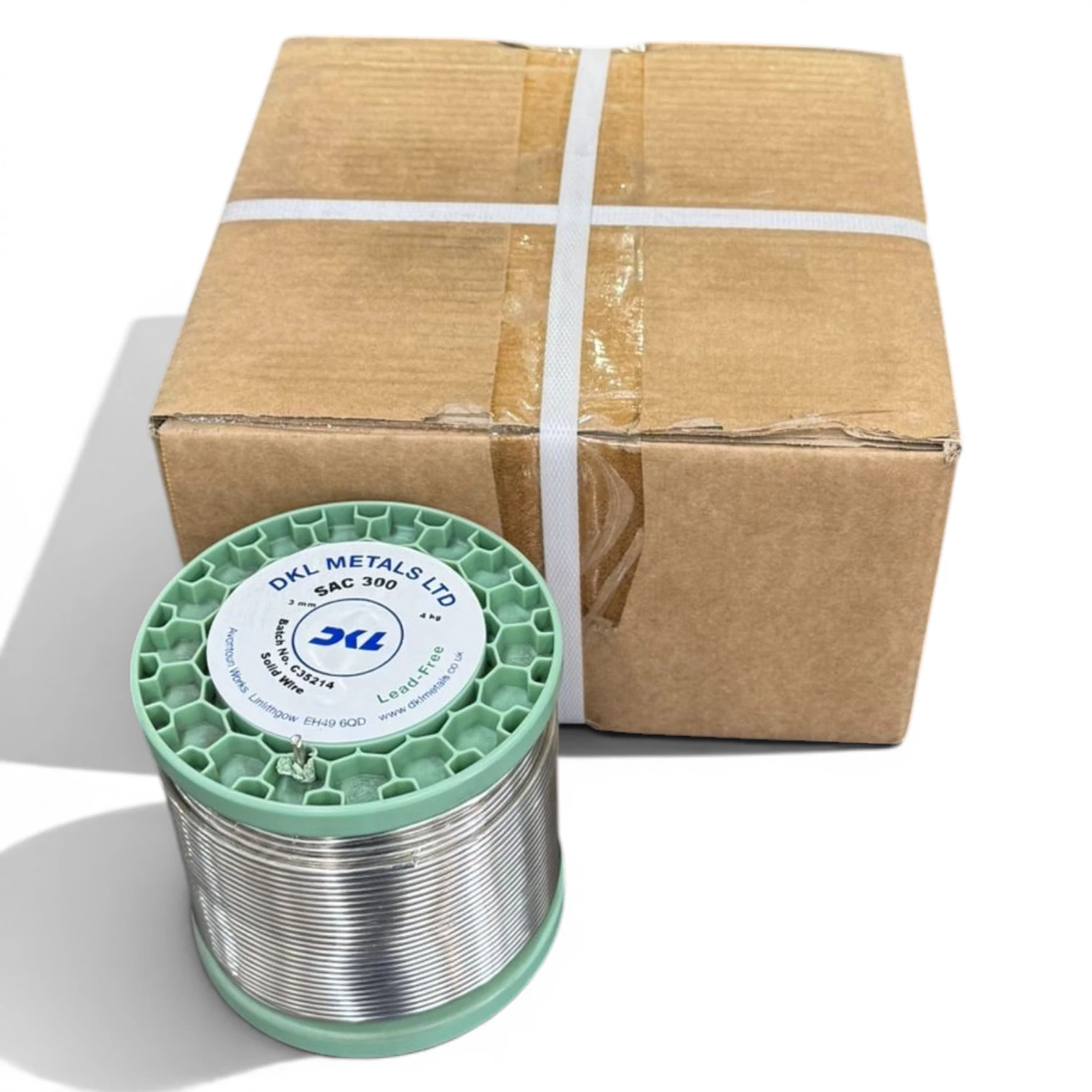
Lead-Free Solid Solder Wire
Specialised for Selective Soldering
Our E-Qual Lead-Free solid wires are specifically engineered for the unique thermal and mechanical demands of automated selective soldering. As a high-performance lead-free selective wire, it enables manufacturers to achieve consistent, high-yield results in precision through-hole assembly.
Low Running Costs
Minimise dross and reduce solder consumption by up to 90% compared to traditional wave soldering.
Pallet-Free Process
Eliminate the need for expensive pallets, as used in the wave soldering process.
Reduced Labour
Automated wire-feed systems require minimal operator intervention, ensuring 24/7 repeatability.
Alloy Performance Data
| Property | 97TSC (SAC305) | SN100C | SAC300 |
|---|---|---|---|
| Composition | Sn96.5 / Ag3.0 / Cu0.5 | Sn99.3 / Cu0.65 / Ni0.05 | Sn97.0 / Ag3.0 |
| Solidus/Liquidus | 217°C – 220°C | 227°C (Eutectic) | 217°C – 221°C |
| Ultimate Tensile Strength | 52 MPa @ 21 °C | 35 MPa @ 21 °C | 52 MPa @ 21 °C |
| Density | 7.4 g/cm³ | 7.47 g/cm³ | 7.4 g/cm³ |
Standard Formats: Supplied in 2mm and 3mm diameters on 4kg DIN K125 plastic reels to suit most automated wire-feed systems (3kg reels available on request). All alloys are manufactured to ISO 9453:2020 standards.
Lead-Free Selective Solder Wire FAQ
What is the best lead-free solder for automated selective soldering? +
For most automated selective soldering applications, SN100C and SAC305 (97TSC) are the industry standards. SN100C is highly valued for its lower copper dissolution and smooth, bright joints, while SAC305 offers higher tensile strength. SAC300 is often used as a replenishment alloy to balance copper levels. The choice depends on your specific thermal profile requirements and assembly standards.
Why should I use solid solder wire instead of flux-cored wire for pot top-ups? +
Using solid solder wire for automated top-ups prevents flux build-up in the solder pot. Since the pot already contains liquid flux applied during the process, adding cored wire would shift the chemical balance and lead to excessive dross and contamination.
How do SN100C and SAC305 compare in terms of copper dissolution? +
SN100C is specifically engineered to minimise copper leaching (dissolution), making it ideal for thin copper pads and high-reliability electronics. SAC305 has a slightly higher rate of copper dissolution but provides superior creep resistance and tensile strength (52 MPa) for high-stress environments.
What are the reel specifications for robotic soldering wire feeders? +
Our lead-free auto-feed wires are supplied on DIN K125 plastic reels, weighing 4kg as standard. This format is compatible with the majority of selective soldering machines.
Is selective soldering more cost-effective than wave soldering? +
Yes, by eliminating the need for expensive aperture pallets, reducing solder dross by up to 90%, and lowering nitrogen and electricity consumption, it offers a much lower cost-per-joint for PCB assemblies.
What wire diameters are standard for selective soldering top-up systems? +
Standard diameters for automated top-up systems are 2.0mm and 3.0mm. These sizes allow for a fast, controlled melt rate that quickly replenishes the solder pot without significantly dropping the temperature of the molten alloy.