

Copper Silicon (CuSi) Master Alloys
High-Performance Hardening & Casting Agents
Our Copper-Silicon (CuSi) master alloys are engineered for high-precision precipitation hardening and metallurgical refinement. Available in high-purity and ECO grades, these alloys are essential for improving the mechanical strength of low-alloyed copper and enhancing the castability of complex brass and copper-nickel systems.
Structural Strengthening
Utilised as a primary agent for precipitation hardening, significantly increasing the tensile strength and hardness of low-alloyed copper products.
Castability Enhancer
Significantly improves the flow characteristics and mould-filling capabilities of brass and copper-nickel alloys during complex casting processes.
Purity Versatility
Offered in “High Purity” for sensitive electronic or aerospace applications and “ECO-grades” for cost-effective industrial manufacturing.
Technical Specifications (Weight %)
| Master Alloy | Si (%) | Pb max. | Sn max. | Fe max. | Mn max. | Ni max. | Zn max. | Cu+Si min. |
|---|---|---|---|---|---|---|---|---|
| CuSi10 high purity grade | 9.0 – 11.0 | 0.05 | 0.05 | 0.25 | 0.10 | 0.10 | 0.10 | > 99.5 |
| CuSi10 ECO-grade | 9.0 – 11.0 | 0.10 | 0.10 | 0.30 | 0.20 | 0.20 | 0.20 | > 99.0 |
| CuSi15 high purity grade | 14.0 – 16.0 | 0.05 | 0.05 | 0.30 | 0.10 | 0.10 | 0.10 | > 99.5 |
| CuSi15 ECO-grade | 14.0 – 16.0 | 0.10 | 0.10 | 0.40 | 0.20 | 0.20 | 0.20 | > 99.0 |
| CuSi20 high purity grade | 18.0 – 22.0 | 0.15 | 0.20 | 0.40 | 0.15 | 0.20 | 0.20 | > 99.3 |
| CuSi20 ECO-grade | 18.0 – 22.0 | 0.20 | 0.20 | 0.50 | 0.20 | 0.25 | 0.25 | > 99.0 |
| CuSi30 high purity grade | 28.0 – 32.0 | 0.15 | 0.20 | 0.50 | 0.15 | 0.20 | 0.20 | > 99.3 |
| CuSi30 ECO-grade | 28.0 – 32.0 | 0.20 | 0.20 | 0.65 | 0.20 | 0.25 | 0.25 | > 98.5 |
*Derived from KBM AFFILIPS CuSi Technical Data (2023-02). Specifications for master alloys generally align with BS EN 1981. Other grades and packaging available upon request.
Physical Properties & Melting Ranges
View Melting & Density Data +
- CuSi 10% (High Purity/ECO): 1000 – 1050 °C | ~8.0 g/cm³
- CuSi 15% (High Purity/ECO): 940 – 1010 °C | ~7.6 g/cm³
- CuSi 20% (High Purity/ECO): 860 – 950 °C | ~7.1 g/cm³
- CuSi 30% (High Purity/ECO): 760 – 830 °C | ~6.4 g/cm³
*Melting ranges are approximate. Density decreases as Silicon content increases.
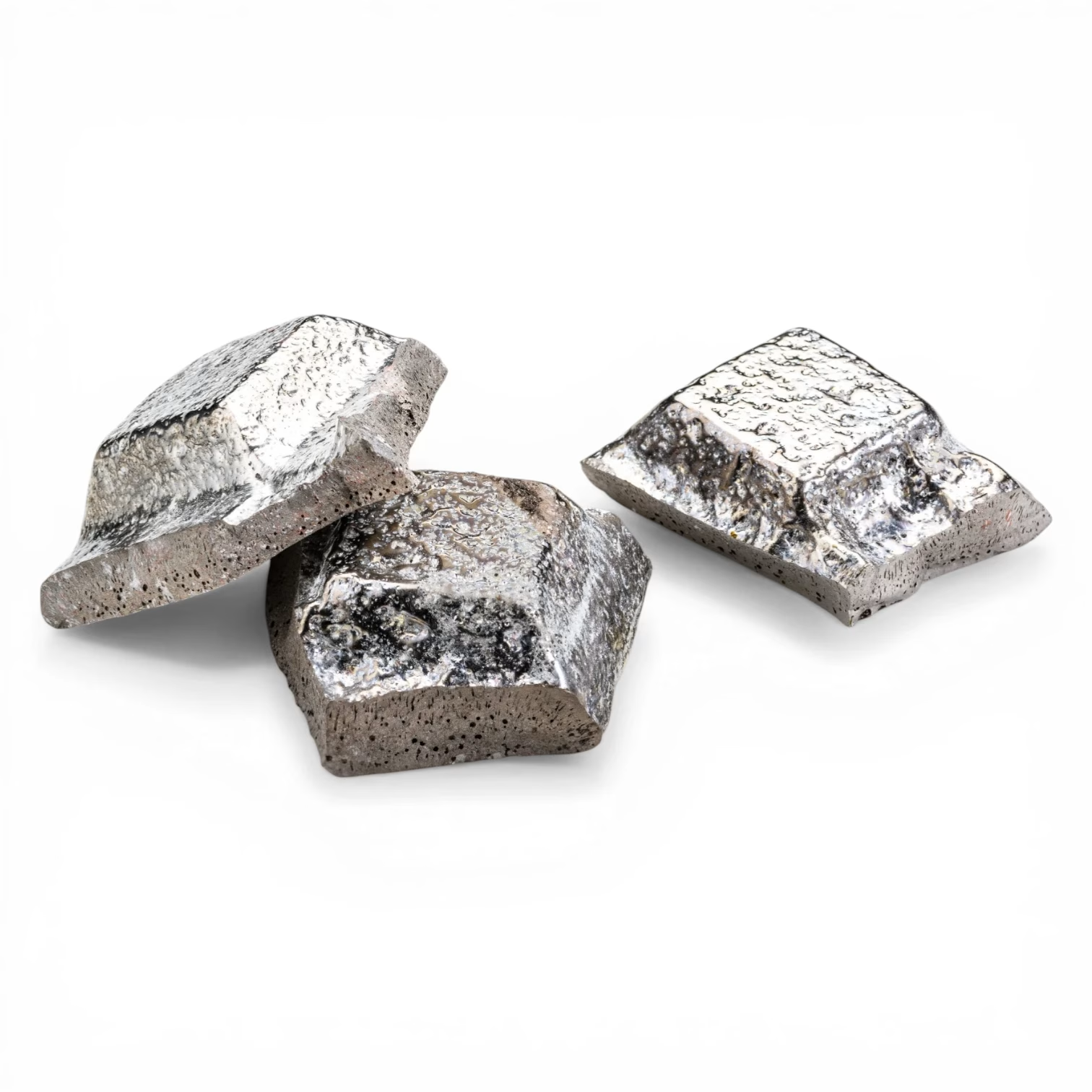
Standard Formats: Supplied as broken waffle ingots on a wooden pallet.
Copper-Silicon Master (CuSi) FAQ
How should CuSi be added to the melt? +
Clean the bath surface of all dross before addition. Add the required amount of master alloy at normal operating temperatures and stir thoroughly to ensure complete and homogeneous dissolution. Unlike phosphorus, silicon does not “fade” as rapidly, but prompt casting is still recommended for consistent results.
When is Copper-Silicon specifically recommended? +
CuSi is the preferred choice for Copper-Nickel alloys (CuNi), as it provides essential deoxidation and fluidity without causing the grain boundary embrittlement associated with phosphorus. It is also vital for precipitation hardening in low-alloyed copper.
When should Copper-Silicon be avoided? +
CuSi should not be used in high-conductivity copper applications where maximum electrical or thermal conductivity is required, as silicon significantly increases electrical resistivity even in small amounts.
How does Silicon affect the colour and workability of the alloy? +
Silicon is often used to maintain a more “copper-like” appearance compared to other hardeners. While it increases strength and corrosion resistance, higher silicon content (above 4%) can reduce cold workability, making the alloy more suitable for casting rather than extensive drawing or forming.
Can CuSi be used to improve corrosion resistance? +
Yes. Beyond its role as a hardener, silicon significantly enhances the corrosion resistance of copper alloys, particularly against salt water and acidic environments, making it a key component in marine-grade bronzes and brasses.
How should Copper-Silicon master alloys be stored? +
Store in a clean, dry area to prevent surface oxidation. While more stable than CuP, keeping the material away from high humidity ensures the alloy remains free of surface contaminants before addition to the furnace.