

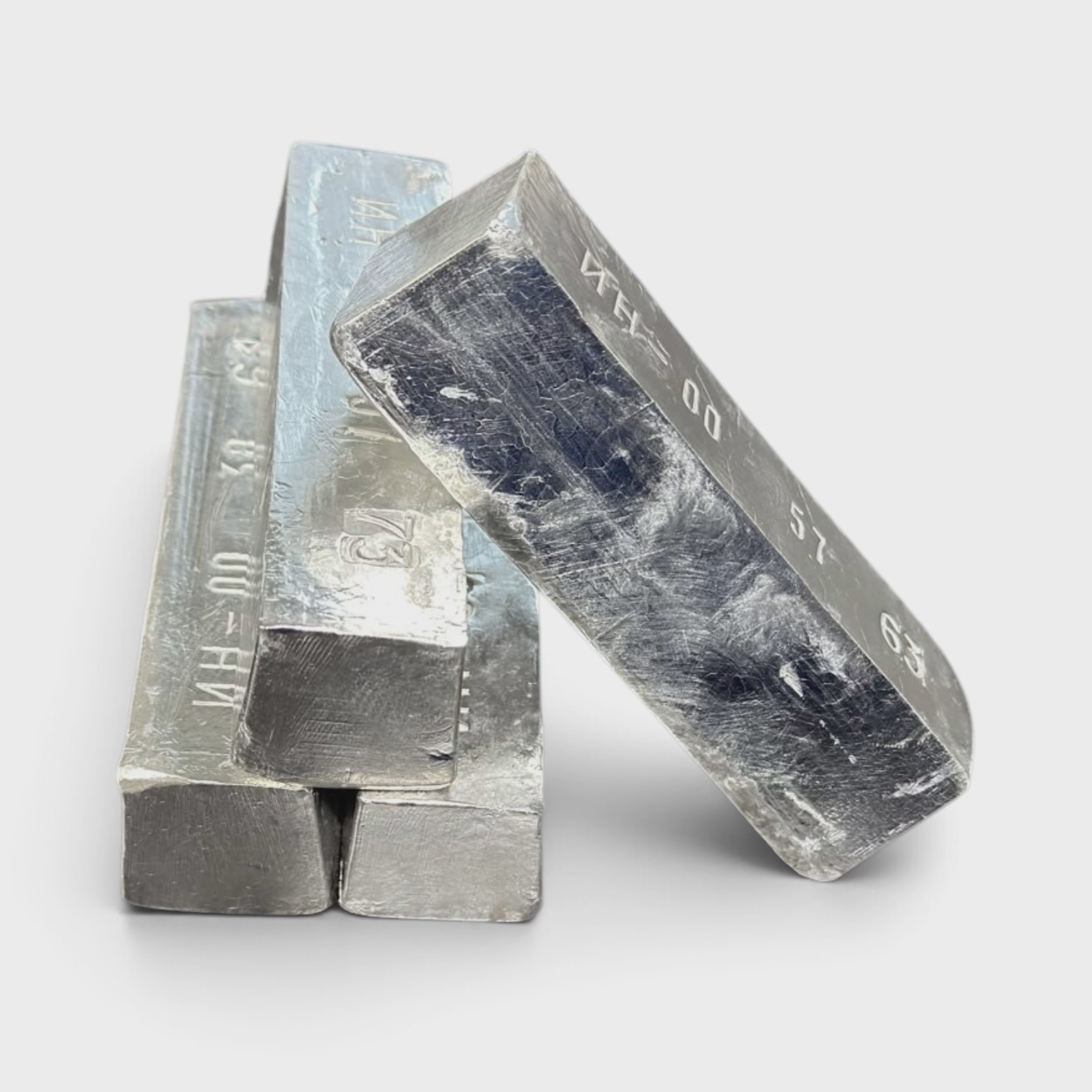
Indium – 99.99% minimum purity (In)
DKL Metals supplies high-grade Indium with a guaranteed minimum purity of 99.99%, engineered strictly for demanding UK industrial applications and advanced manufacturing sectors. Available in multiple commercial forms, our pure Indium delivers the exact thermal, electrical, and physical properties required for mission-critical components.
Core Industrial Applications
ITO & Semiconductors
A vital component in Indium Tin Oxide (ITO) for manufacturing transparent, conductive thin-film coatings used across flat-screen monitors, televisions, and smartphone displays. It also supports high-speed optoelectronic devices.
Fusible Safety Alloys
An essential alloying element used to formulate Low Melting Point Alloys (LMPAs). Combined with bismuth, lead, or tin, it produces highly reliable thermal fuses, fire sprinkler links, and safety cutoff devices.
Cryogenic & Vacuum Seals
Remains exceptionally soft and flexible even at ultra-low cryogenic temperatures. Perfect for creating highly reliable, hermetic vacuum seals required in laboratory, aerospace, and deep-space hardware installations.
Solar & Optoelectronics
Extensively utilised in the next generation of photovoltaic solar panels, specialised infrared sensors, and precision electrical assemblies where high-performance thin-film layers are vital.
Material Specifications
| Property / Parameter | Specification Value |
|---|---|
| Minimum Purity | 99.99% Minimum (In) |
| Appearance | Silver-white metallic luster |
| Physical Characteristic | Highly malleable, ultra-soft metal, can be scratched with fingernail |
| Primary Industry Standards | ISO 9001:2015 & ISO 14001:2015 Compliance |
| Melting Point | 156.60 °C (313.88 °F) |
Advanced Technical Integration
Thermal Mechanics & Advanced Solder Alloys +
Indium plays a critical role in controlling precise thermal characteristics during assembly. When blended into specialised low-melting-point systems, it creates highly accurate fusible matrices that activate predictably between 43°C and 93°C.
This precision is key when protecting heat-sensitive electronics. To better understand how specialised alloys prevent thermal damage in complex assemblies, read our comprehensive guide on solder manufacturing for high and low melting point solders.
Marine Cathodic Protection +
Beyond electronics, pure Indium is deployed as a critical minor addition in high-performance aluminium anodes. This specific formulation ensures consistent galvanic performance and optimised sacrificial rate efficiency for marine cathodic protection systems.
Frequently Asked Questions
How do you verify the purity of 99.99% high purity indium metal? +
Every commercial batch of Indium supplied by DKL Metals undergoes strict quality control and verification procedures. We maintain full traceability and compliance with ISO 9001:2015 quality standards. A formal Certificate of Analysis (CoA) confirming the 99.99% minimum purity threshold can be provided upon request with your delivery to satisfy manufacturing audits.
Can I order custom sizes or shapes from a UK indium metal supplier? +
Yes. While raw pure Indium is routinely sourced in standard ingots or bars, DKL Metals works flexibly with industrial buyers. Depending on our current stock allocations, processing capabilities, and your unique tooling setups, we can supply Indium tailored to your production runs. Contact our commercial team to discuss weight allocations and available formats.
Why is 4N indium preferred for low melting point fusible alloys? +
A minimum purity of 99.99% (commonly referred to as 4N purity) ensures that trace elemental variations do not alter the predictable thermal mechanics of your final alloy matrix. In fusible safety links, thermal cutoffs, and fire protection systems, maintaining a precise, repeatable melting signature between 43°C and 93°C is safety-critical. Lower grades risk impurity clustering, which compromises activation consistency.