

Manganese Flake (Mn)
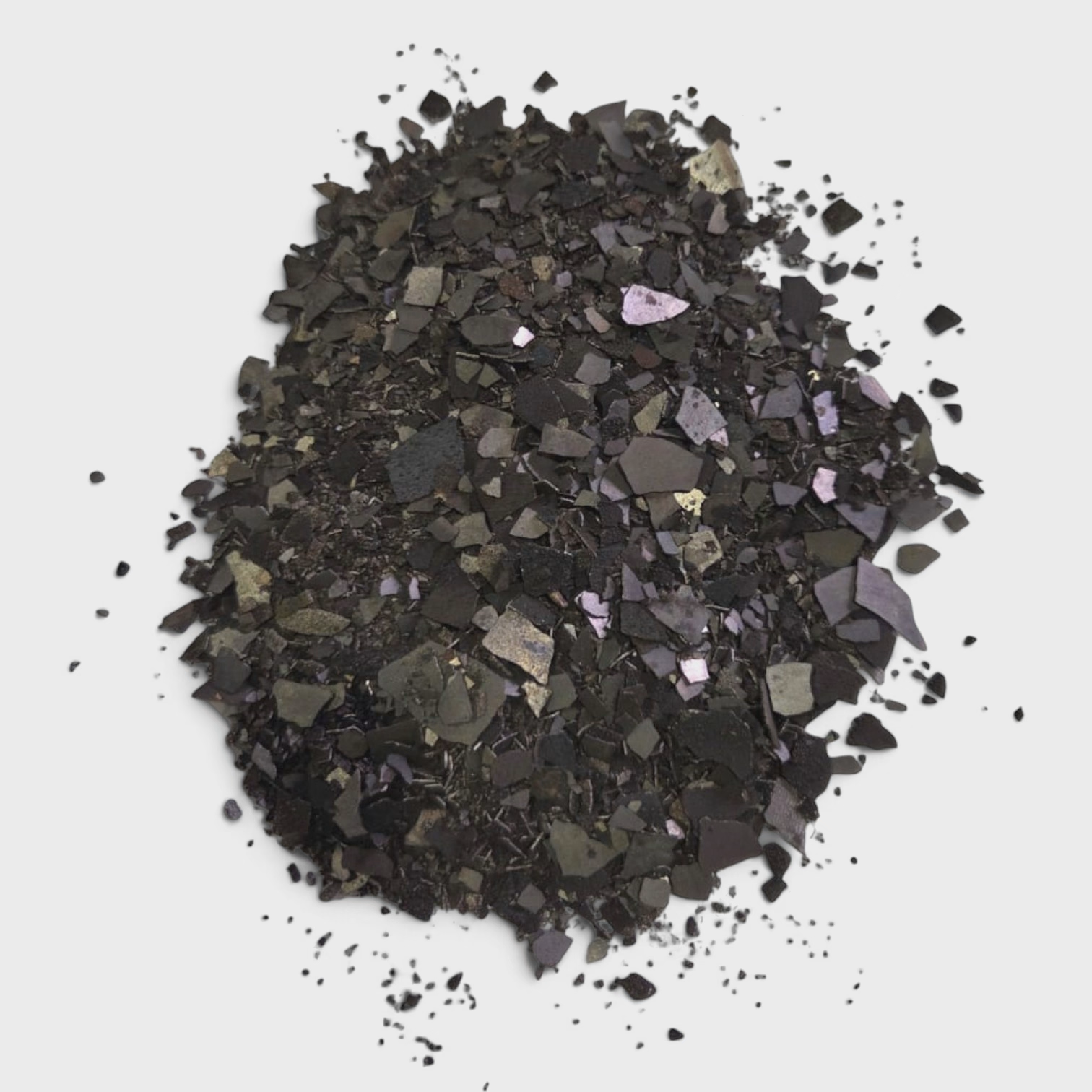
Manganese is a silver-grey metal which is naturally occurring, it can be found in water, soil and rocks. Manganese is an essential alloying element in steel and some aluminium and bronze alloys. It improves strength, hardness, and wear resistance. DKL Manganese Flake offers a cost-effective alternative to ferro-manganese alloys where precise carbon control is necessary.
Strength
Significantly boosts the overall structural integrity and load-bearing capacity of the final metal matrix.
Hardness
Provides critical wear resistance and hardness properties necessary for heavy-duty industrial alloys.
Carbon Control
Serves as a high-purity alternative to traditional ferro-alloys when strict carbon limitations are required.
Manganese Technical Properties
| Property | Technical Specification |
|---|---|
| Chemical Purity (Mn) | 99.7% min. |
| Melting Point | 1246 °C (1519 K) |
| Boiling Point | 2061 °C (2334 K) |
| Density (at room temp) | 7.21 g/cm³ to 7.44 g/cm³ |
| Mohs Hardness | 6.0 |
| Crystal Structure | Body-Centered Cubic (α-Mn) |
Product Sizing & Form Availability
- Flakes: Sized between 1 mm and 25 mm to suit a wide variety of commercial and metallurgical alloying applications.
Applications of Manganese Flake
Steelmaking & Metallurgy
Used extensively throughout the steelmaking industry to intentionally alter mechanical attributes, enhance structural integrity, and optimise yield strength under high stress.
Aluminium & Bronze Alloy Production
Perfectly suited for precise integration into non-ferrous mixes to significantly amplify corrosion resistance, reduce structural degradation, and elevate overall durability.
Frequently Asked Questions
Why use electrolytic manganese flakes instead of ferro manganese? +
Electrolytic manganese flakes are preferred over standard ferro-manganese alloys when you need precise carbon control in your melt. Because these flakes offer a high chemical purity of 99.7% minimum, they let metallurgists hit exact specifications without accidentally adding carbon, sulphur, or other undesirable trace elements to specialized steel or non-ferrous batches.
How does adding manganese flakes improve aluminium alloy properties? +
When dissolved into molten aluminium, manganese alters the grain structure to substantially improve both strain-hardening capabilities and ultimate tensile strength. It also provides excellent protection against atmospheric and saltwater corrosion, making it highly valuable for manufacturing structural sheet metal, beverage cans, and marine-grade components.
What is the typical size and thickness of commercial manganese flakes? +
Commercial manganese flakes are typically processed to an irregular surface size between 1 mm and 25 mm. They feature a very thin profile, usually averaging between 0.3 mm and 1.2 mm thick, which gives them an optimal surface-area-to-mass ratio for rapid, uniform dissolving in industrial furnace environments.